Spark plugs - A guide.
Hey guys,
I thought i would do a little bit of a write up about spark plugs. Now there is plenty of information on what the letters stand for etc, so i thought i would try and cover the differences in heatranges in a visual guide, and also a bit of a guide on when you remove your plugs, what info you can gain from having a close look at them before you throw them in the bin.
You might of heard people talk about needing colder spark plugs, but how many of you understand why you go for a colder plug, and also what makes the plug colder?? Essentially, the ceramic material surrounding the electrode on a spark plug acts as a heatsink. As the engine gets put through its paces, this ceramic serves to dissipate the heat from the electrode, to allow it to function normally. Now once the ceramic is presented with too much heat to dissipate, the electrode heats up, and heat means higher resistance. This resistance effectively gives you a weaker spark, and can cause a missfire. You may have seen or heard a car with a big ignition system on a dyno start to missfire up high - one possible cause of this is mismatched spare plugs.
Now, in extreme cases if the heat is allowed to build up enough, the electrode builds up enough heat to glow. When this occurs, you spark plug essentially becomes a glow plug, which causes pre ignition, and is a recipe for a blown head gasket.
Enough talk, time for some pretty pictures

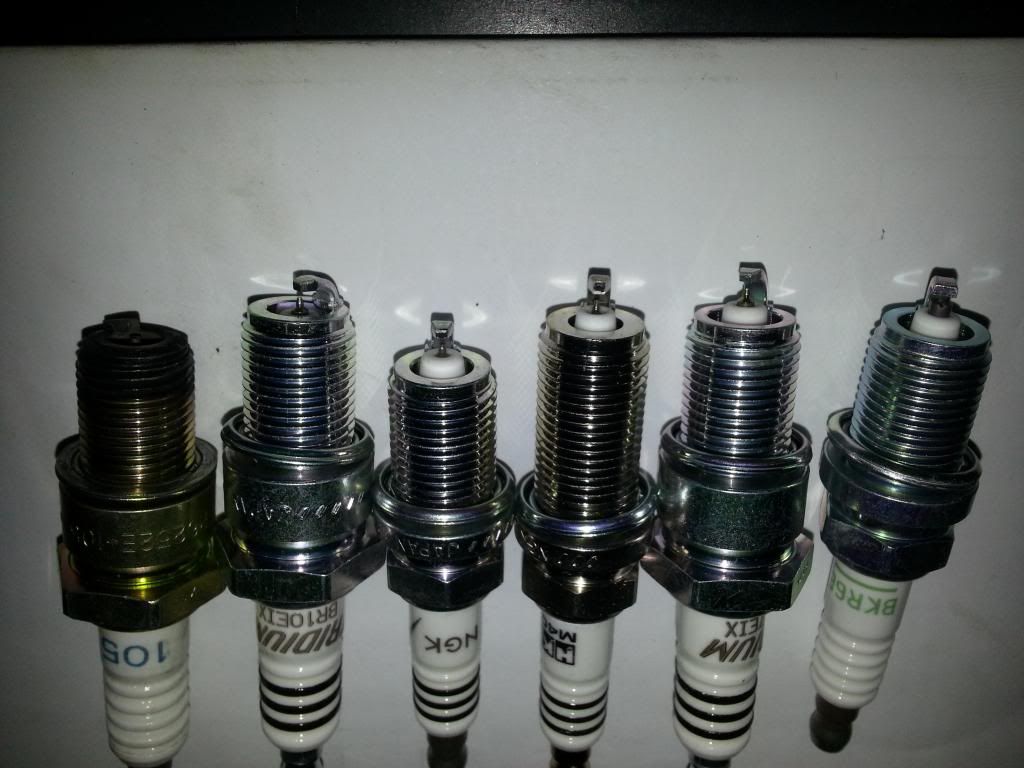
Ive taken some pics of plugs of different heatranges, to try and physically show what i mean about the ceramic around the electrode...
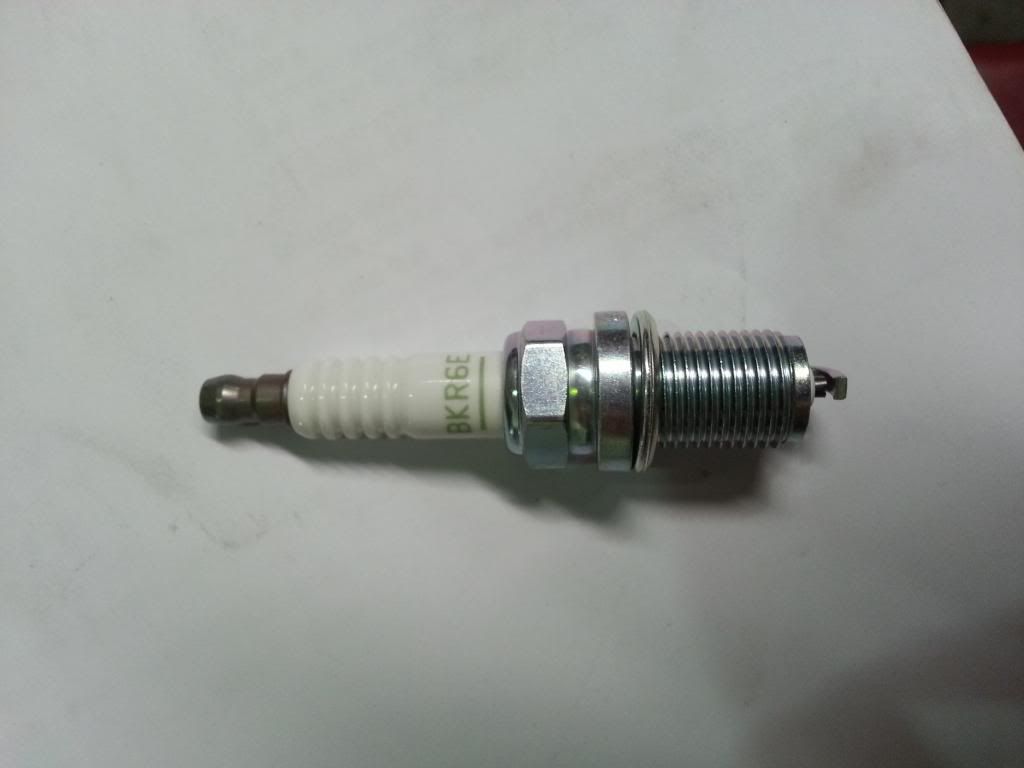
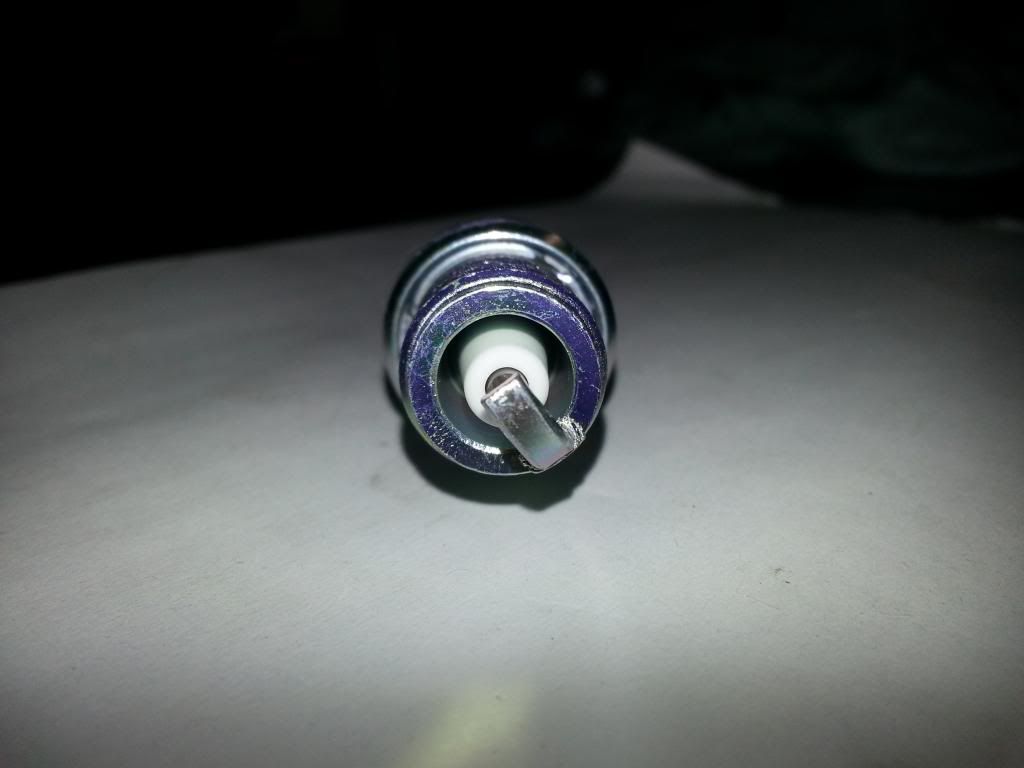
BKR6E: The most garden variety plug used in a standard performance import. What i want you to take note of is when you look down into the plug, how much of a gap is between the outer edge of the plug, and the ceramic.
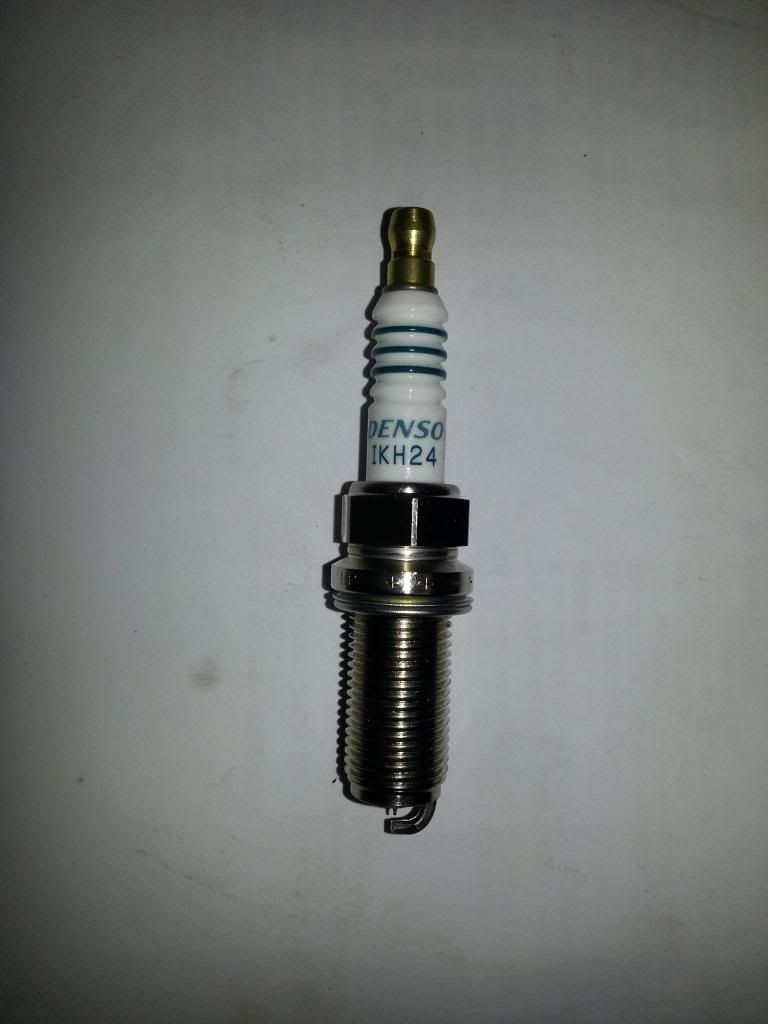
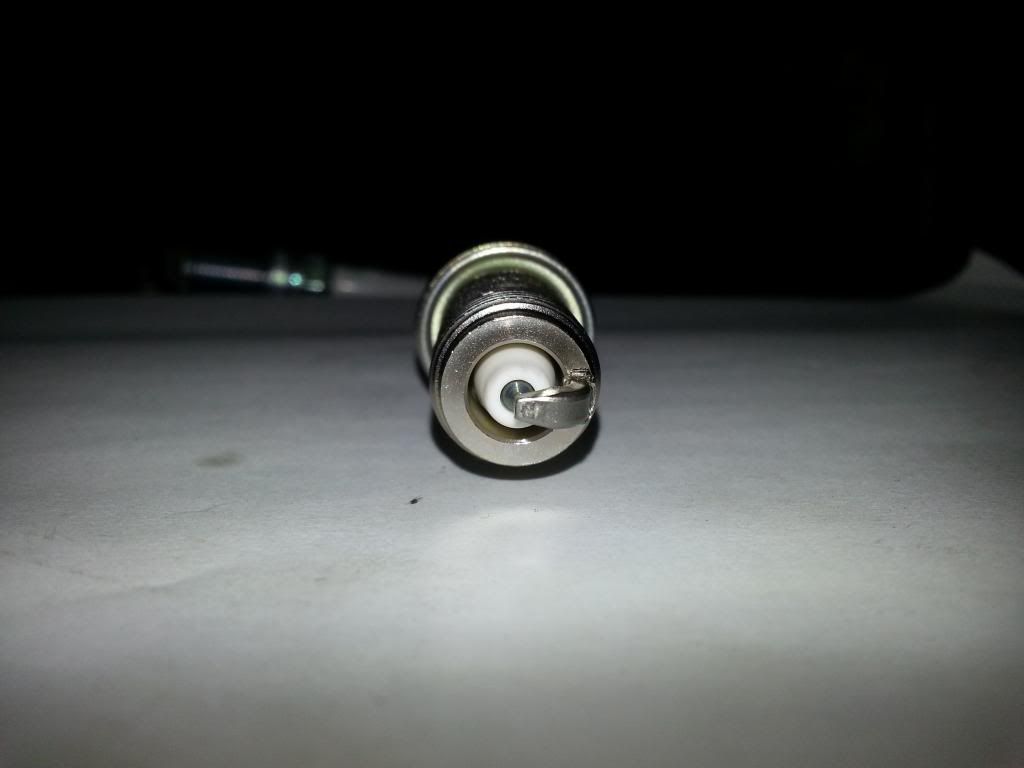
IKH24: Ignoring too many differences (long thread, iridium) this plug is the equivelant of an 8 heat range in NGK scaling. Note the difference in the ceramic.
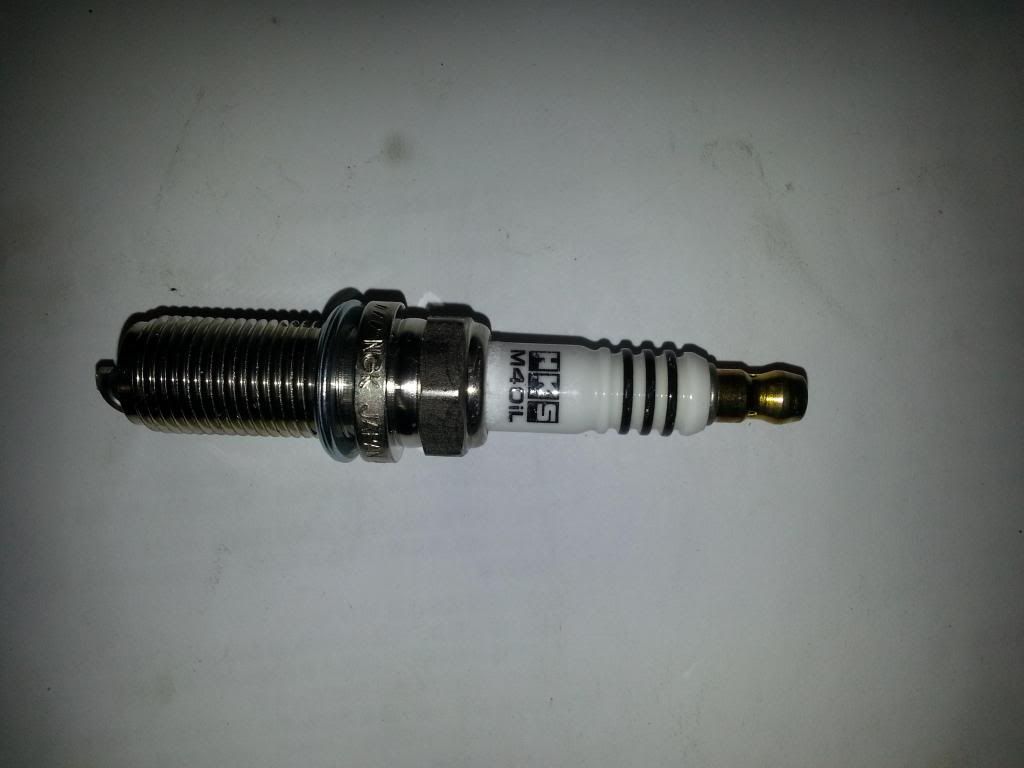
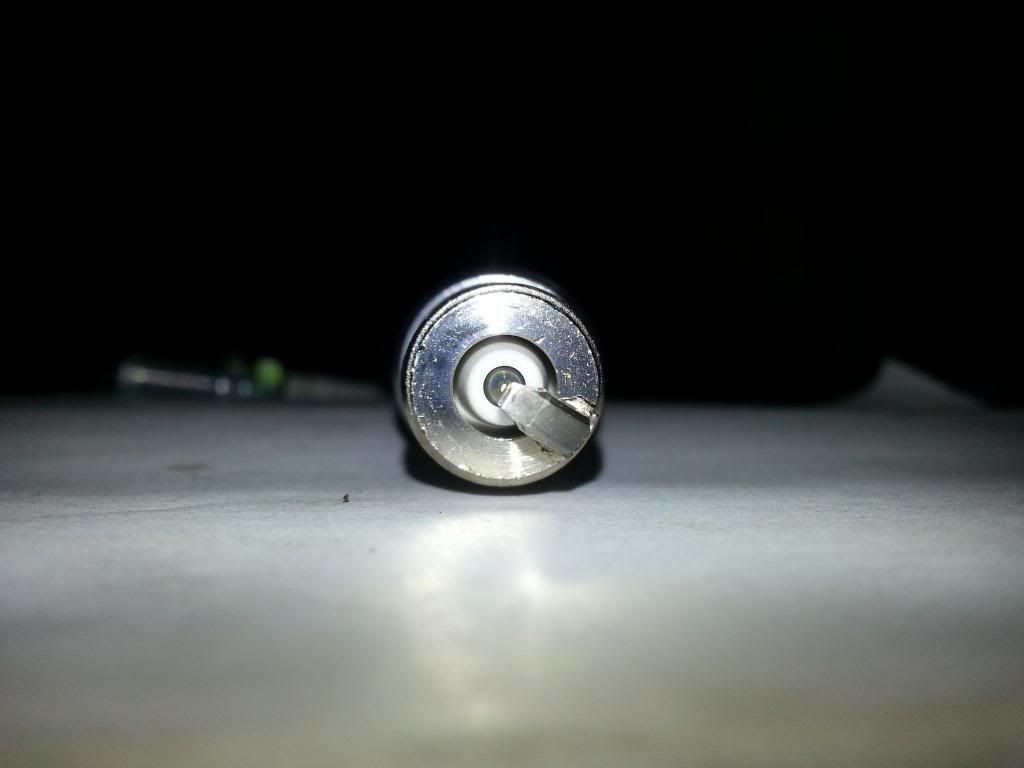
M40iL: This is another 8 heatrange plug, made for HKS by NGK. Note the outer ring of this this plug is a lot thicker. These things take an absolute pounding.
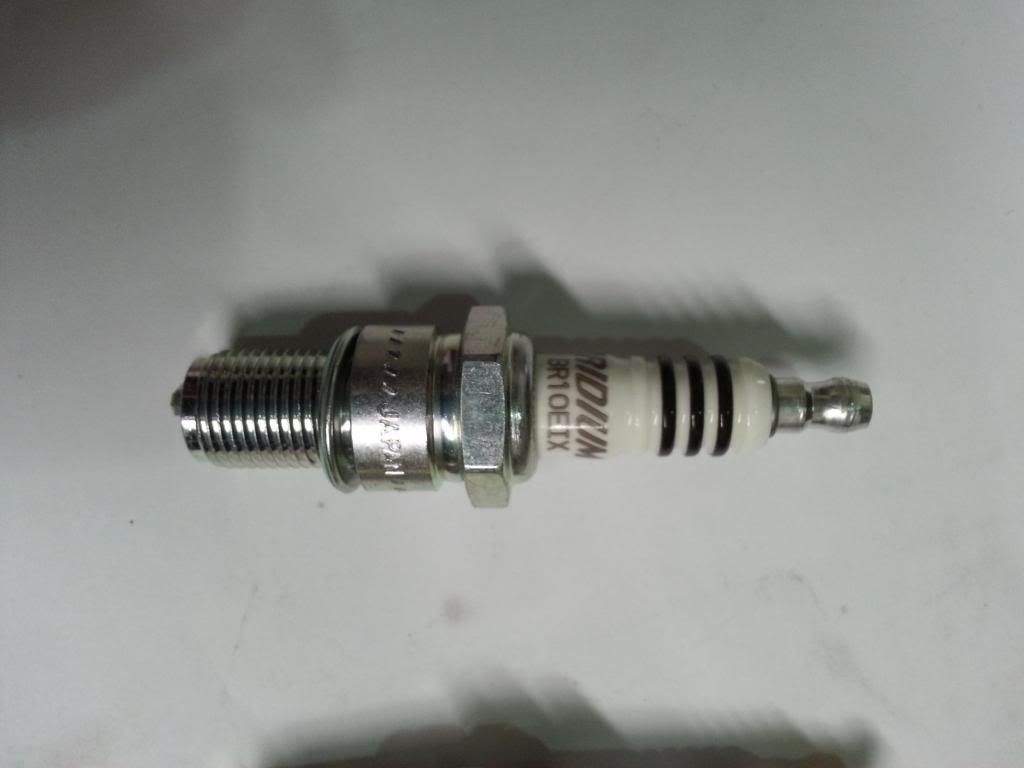
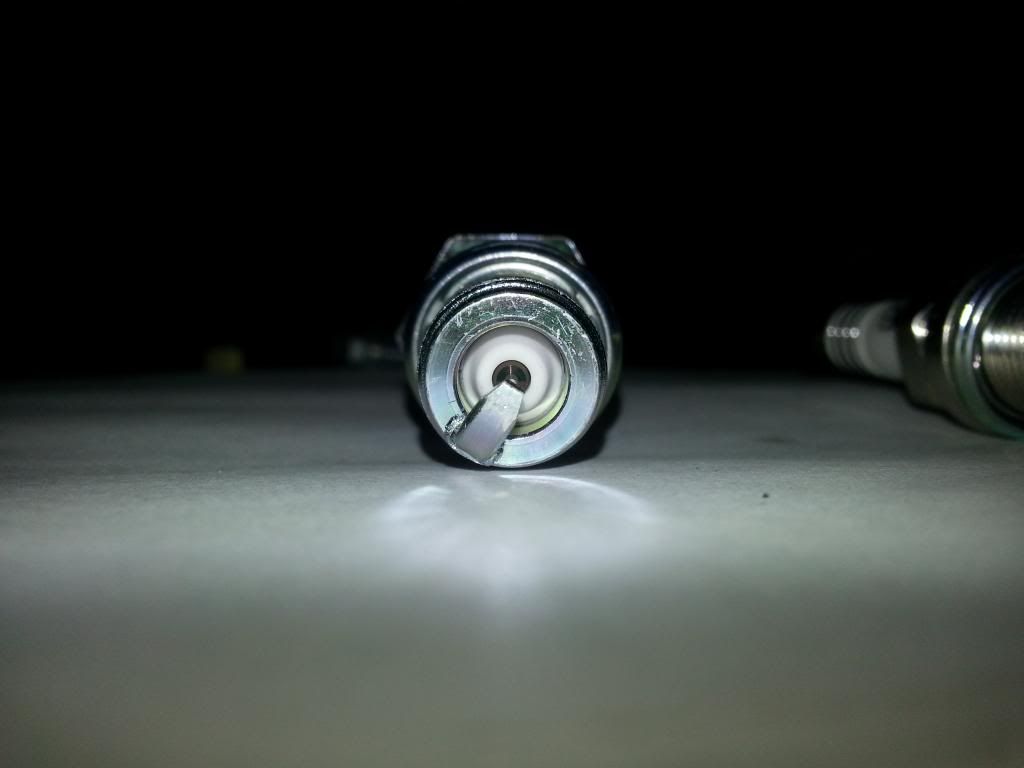
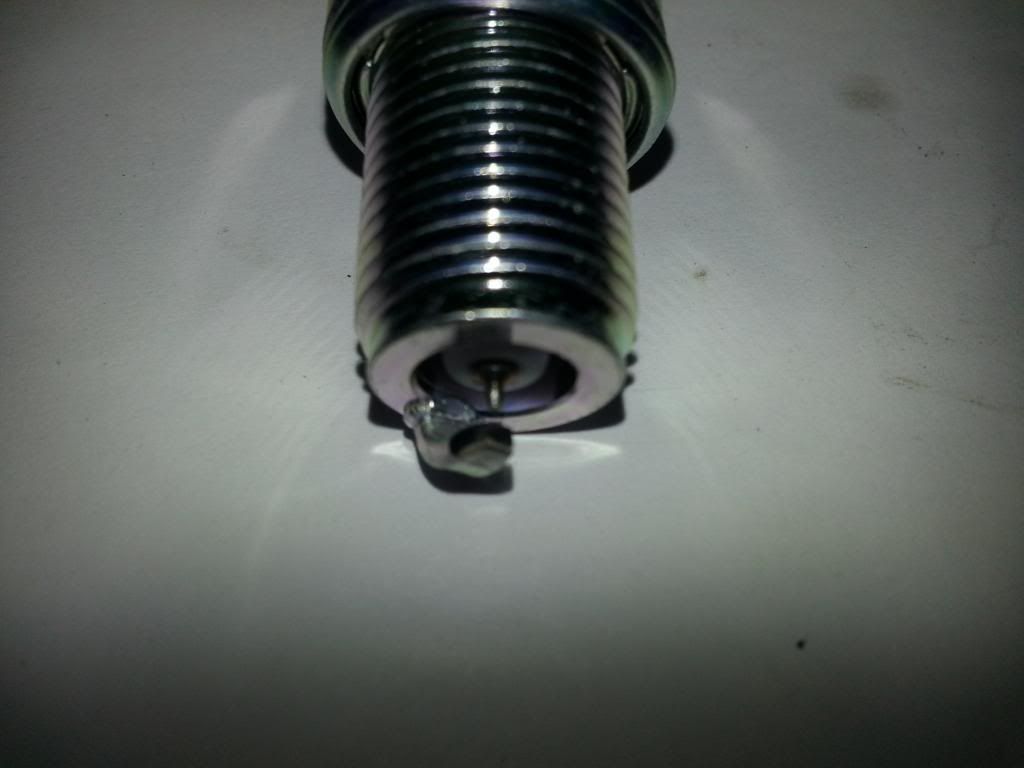
BR10EIX: the coldest conventional iridium plug around. Once you hit this heatrange, the electrode barely protrudes past the end of the plug.Not the ceramic again.
The plugs laid out next to each other. you can see the difference even from this angle.
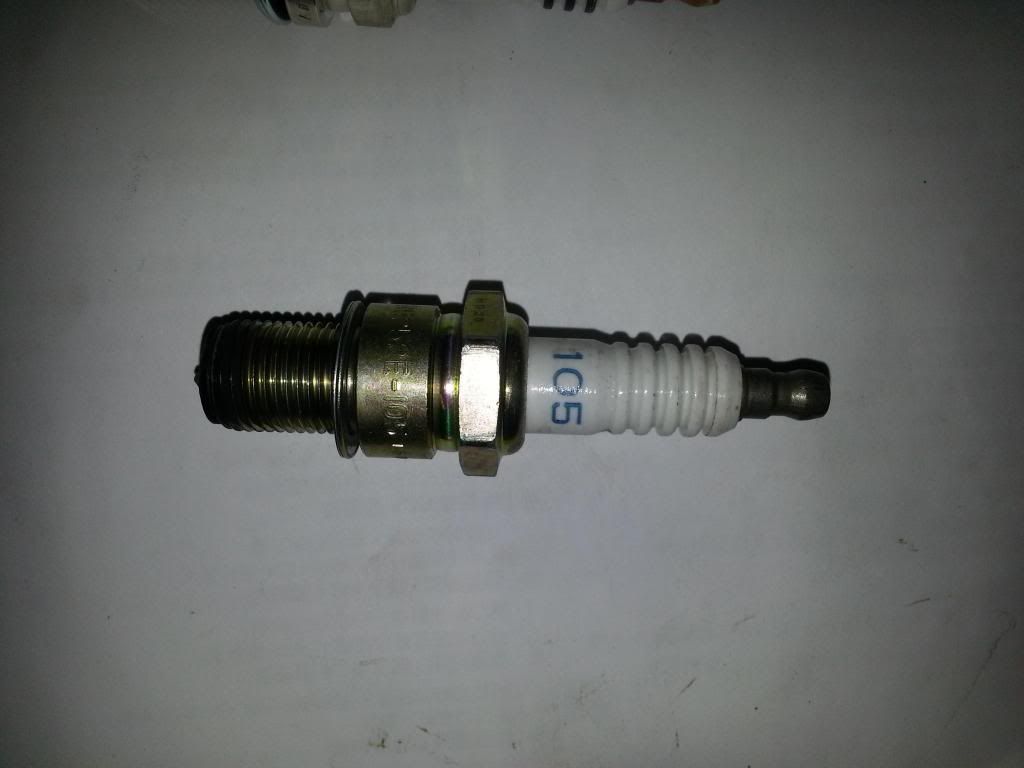
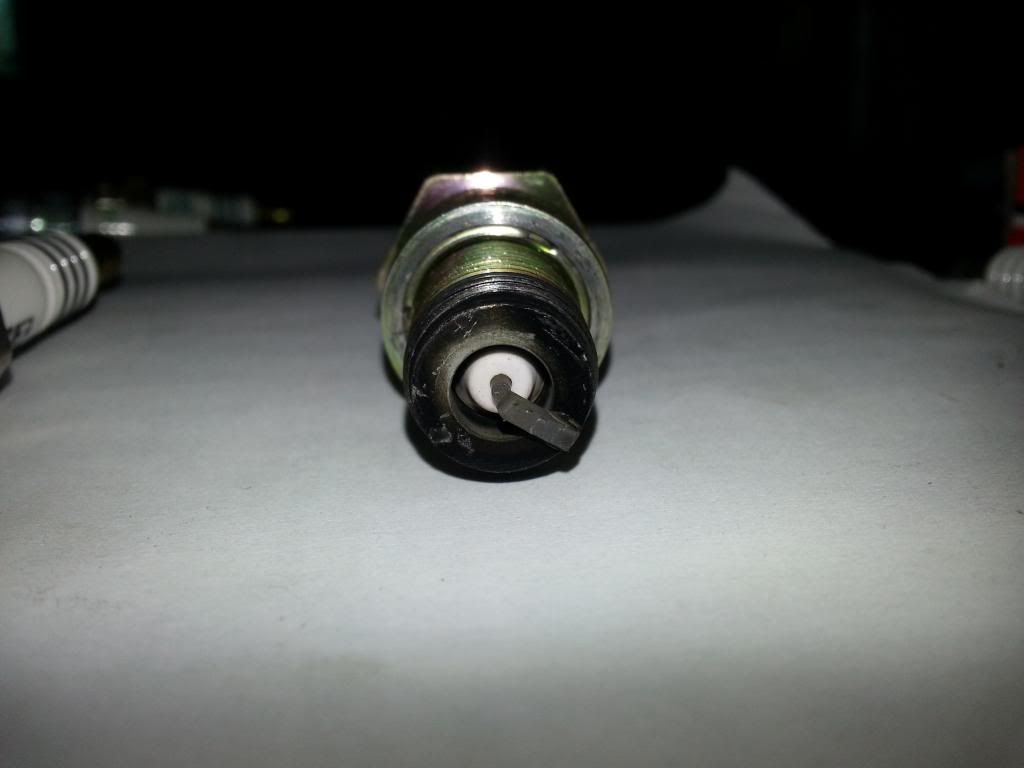
NGK10.5: these are some other the coldest plugs available. I only had used ones around, but these are high boost, high power plugs, meant for racing with the harshest engine conditions.
Now manufacturers normally recommend that you go a heatrange colder for every 75-100hp you add to an engine. Now this is very much a guideline, as there are many factors that can impact on this. Raising the compression dramatically on an engine drastically increases the cylinder pressures, meaning you sometimes have to go a bit colder than the manufacturer scale. An extreme example of this i can give you is an MG race car from the UK i worked on when it came to victoria. It had a JUDD 1.6l enduro race motor. The car only made 136fwkw, but it needed 10 heatrange spark plugs to stop the ignition breaking down revving out to 10,000rpm.
E85 seems to be harsher on sparkplugs, as does high boost. We generally find a heatrange colder on spark plugs is necessary. In the case of very high boost (1.7bar+) it helps if the electrode is recessed.
Now, i mentioned earlier, you can tell a lot about your engines running health by the plugs. I'll put up a few basic examples:
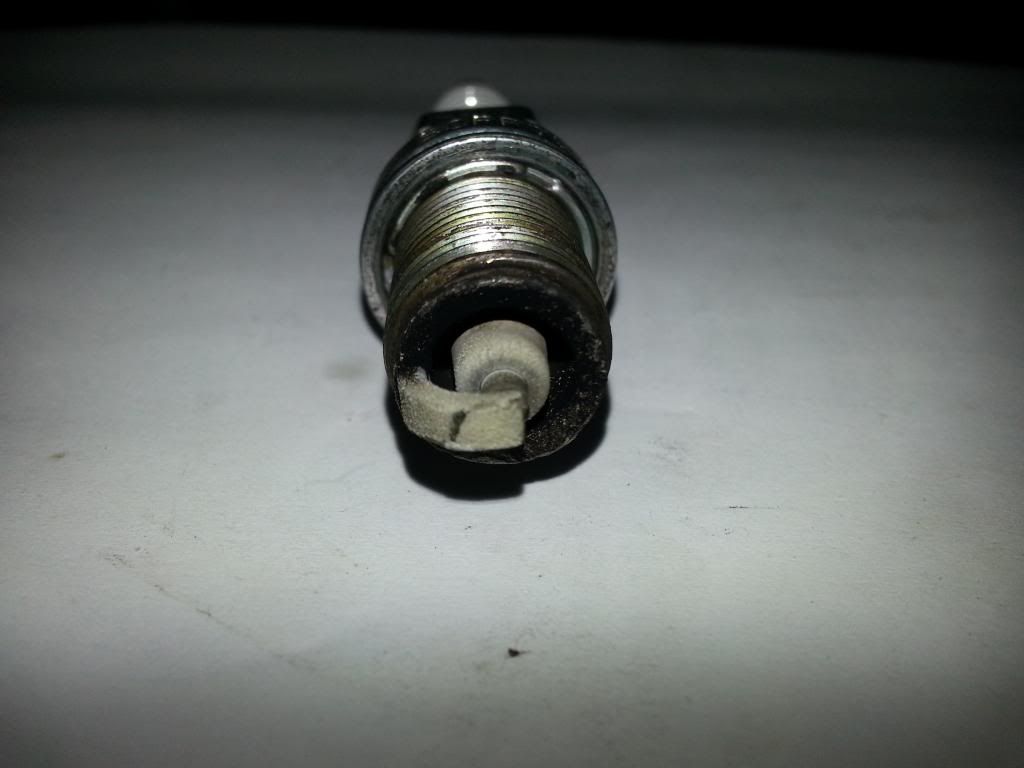
This is a plug typical of burning oil. The powder means that the oil is burning in the combustion chamber, and can be rings, intake valve stem seals or excessive oil circulation in the intake. The powder is reminance of the oil being burnt. The photo isn't great, but can you notice the black carbon buildup on the rim of the plug isn't even, it looks like it is flaking?? This is due to the oil lowering the octane level, causing the motor to ping. This carbon lifting is a sign of pinging whether or not there is oil burning.
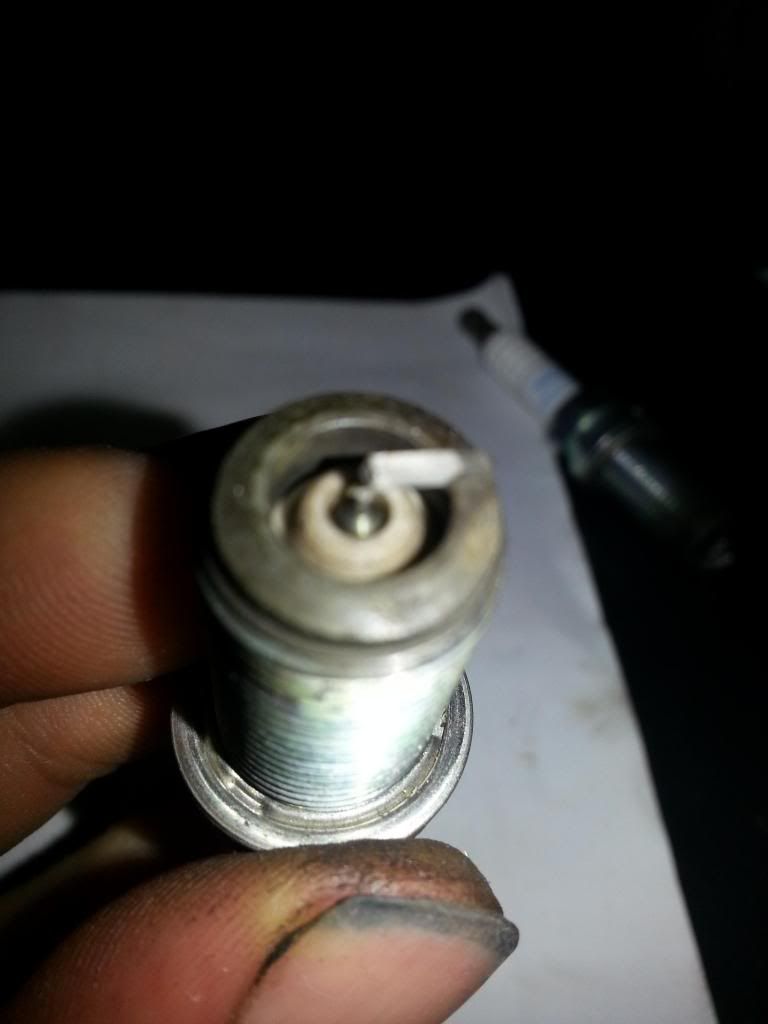
This is very hard, i will probably have to get a more in focus photo some time soon, but can you see the speckles on the ceramic?? This is a combination of carbon, and if under the right light is silver, is tiny bits of piston. It can be used to gauge the amount of pinging as the carbon lifting off the crown is slight pinging, whereas the silver from this piston, is slightly more defined.
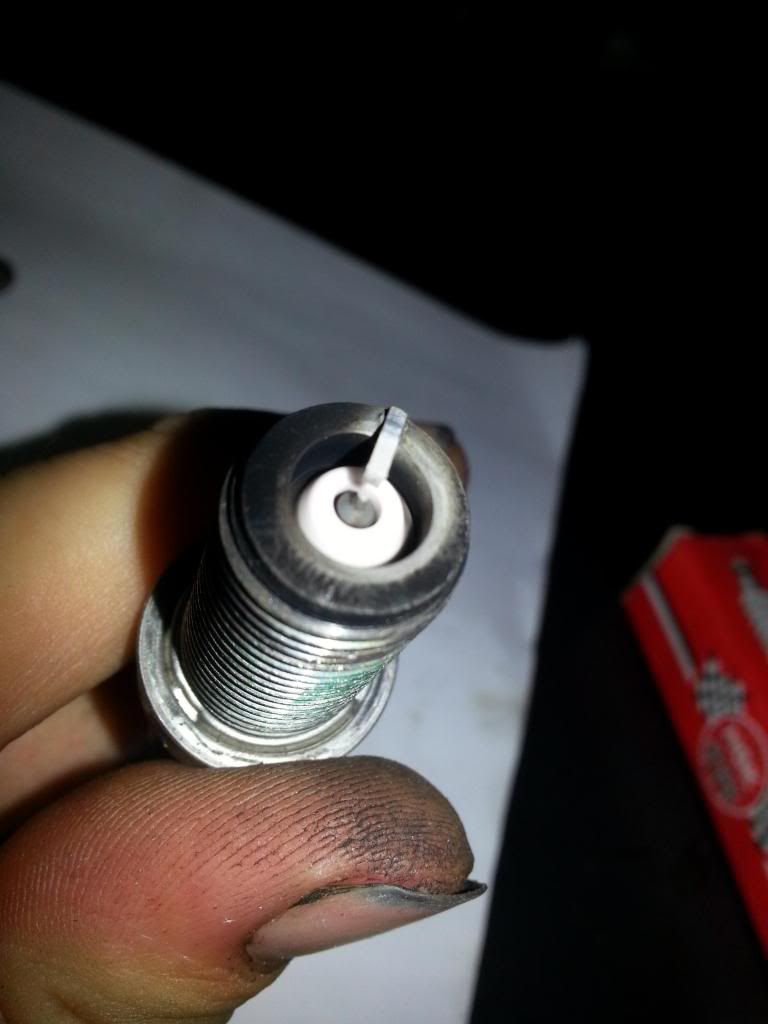
Here is another plug from the same motor, notice how the plug is burning clean?? This is what you want.
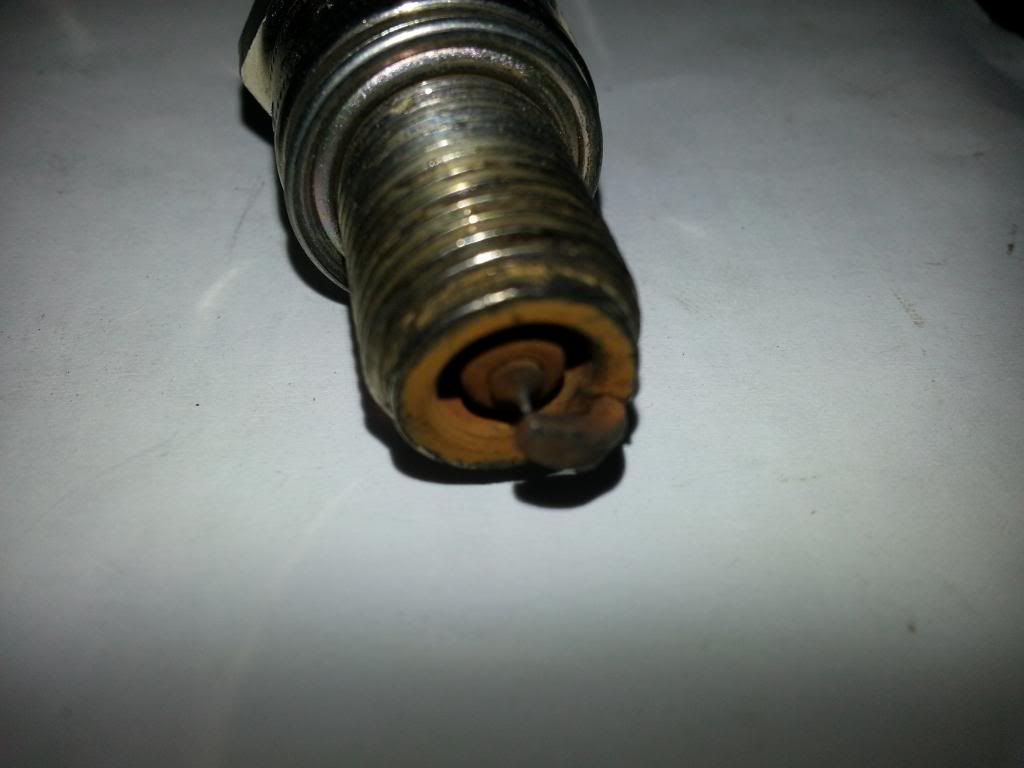
Lastly, the mother of all evil. What does this mean??? it means you run octane booster. You really cannot tell anything more than this from a plug like this. Shows how nasty octane booster is huh??
Well, that's all i have time for atm. Please give me feedback, any other bits you want covered, or otherwise. I will add to this when i have more time, but if there is anything you want added to it, please let me know. Hope you enjoy reading
