2014/01/15 10:55:59
tuban
Hi, my 1990 JDM 3SGTE has been using about 1L of oil every 500-1000km and I can now see some smoke in exhaust under hard acceleration that I wasn't aware of in the past.  So no obvious smoke on start-up or idle.  All of the plugs are dry.  Any suggestions as to how to diagnose where the oil is coming from, rings, valve guides, turbo etc?  I have seen mention of PCV in some threads, is this relevant?  I had a look at the other threads on smoke and oil consumption and they seemed to be different situations.  Thanks
2014/01/15 15:00:06
MCT_MR2
if the plugs are showing no sign of burning oil (a chalky white/grey powder on the plugs) , and you have no oil leaks, then there is a fair chance it could be the turbo oil seal on the turine side.
the other likely option would be the valve sstem seals for the exhaust valves.
2014/01/15 17:35:11
tuban
The plugs are all just as you describe.  I was dreading that one might be oily when I took them out.  Thanks for the advice - gives me somewhere to hunt.  Any suggestion as to how I could determine which, turbo or exhaust seals, it might be?
2014/01/15 18:59:12
MR2QIK
What colour is the smoke? How old is the turbo?
 
Valve stems usually equal momentary white smoke on startup.
2014/01/15 22:04:42
MCT_MR2
Sorry, i just reread my post, if you see a chalky powder like substance on the plugs, ie. the grey white power on the plugs, then your engine IS burning the oil in the combustion chamber. This opens it up to rings, intake valve stem seals (although, as MR2QIK has already pointed out valve stem seals usually allow a puff of smoke on startup.)
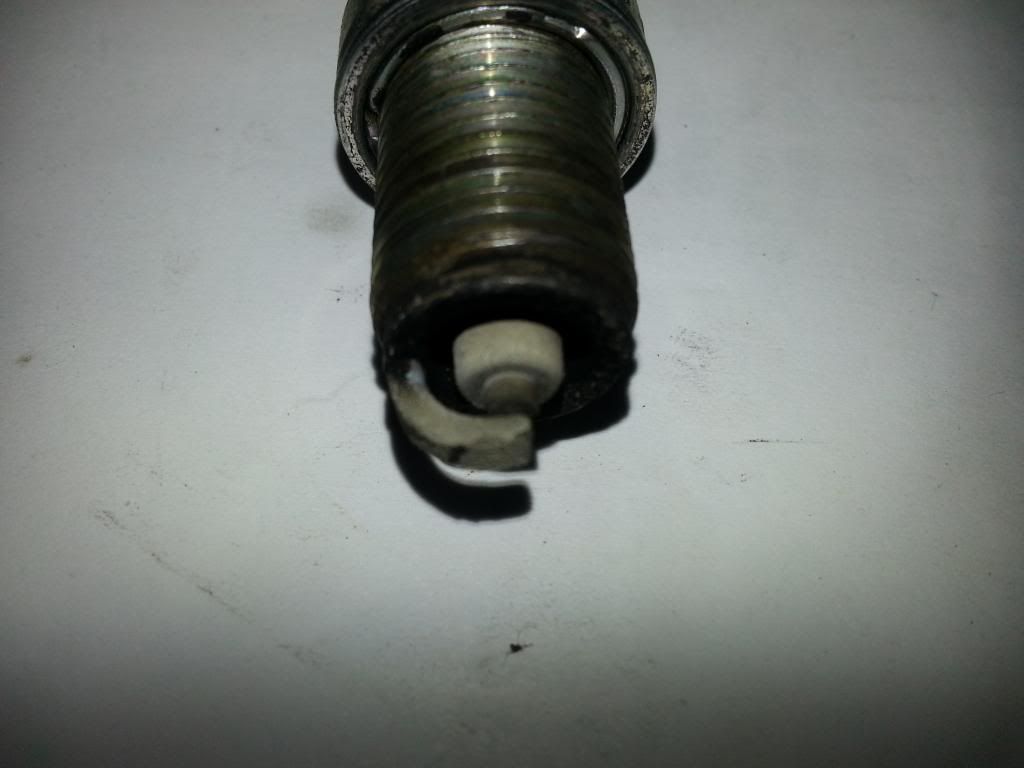
 

A plug from an engine burning oil in the combustion chamber
 
If the plugs are clean, then you can safely assume it will be the turbo. If you wanted confirm, the best was would be to remove the dump pipe and look in the rear of the turbo for evidence oil oil over the turbine blades. Sometimes, but not always, turbos with the rear seal leaking will leak enough to leak past the clamp/bolts that hold the rear housing on and you will find burnt oil running down the turbine housing, starting from the core and running over the housing, which you may be able to visually inspect from under the car.
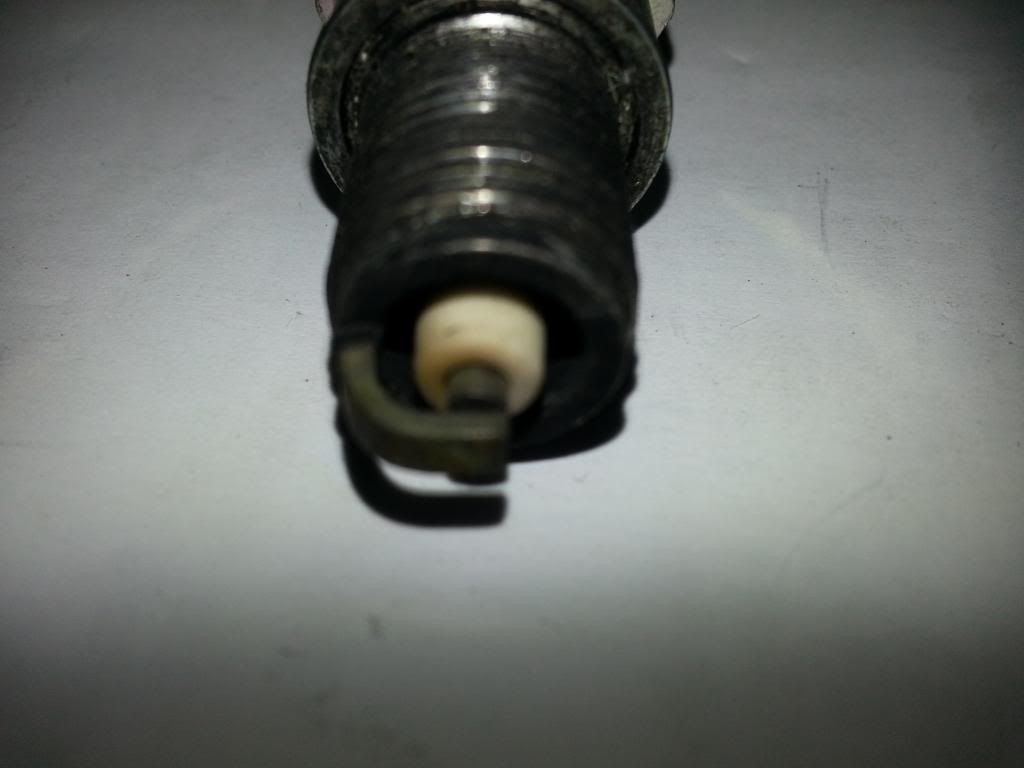
 

A plug from an engine NOT burning oil in the combustion chamber.
 
Hope the visual reference help a little. If it is burning oil, there are a bunch of tests that can be carried out, including a leak down test, and  dry vs wet comp test to get an idea on the state of the rings, although both of these tests rely on the valves sealing correctly to isolate the performance of the rings sealing.
 
Also a bore scope can be used to check the bores, from which you can work out the condition of the rings as well.
 
 
2014/01/17 17:16:12
tuban
Excellent info.  My plugs look more like the oil burners, hard to see in this photo but the insulators were a dry grey colour.   I measured the compression with all plugs out but with fuel etc connected.  The pressures were 130/130/128/130 after 6secs of starter with throttle open.   So pretty good match but on lower end of normal - if my technique was what others use and with my calibrated ebay compression tester?  ODO says 170,000km.  Any opinions?


2014/01/17 19:23:38
Gatesys SW20
Bit low,
My turbo had 165 across all 4.
© 2025 APG vNext Trial Version 5.5

Use My Existing Forum Account

Use My Social Media Account